Holiday Hours:

Monday, January 19, 2026 – Closed
In observance of Martin Luther King Jr. Day.

As of the afternoon of January 23, 2025, our phones are operational. Thank you for your patience as our phone provider experienced a national outage that impacted our phone services on the afternoon of January 22 and the morning of January 23.

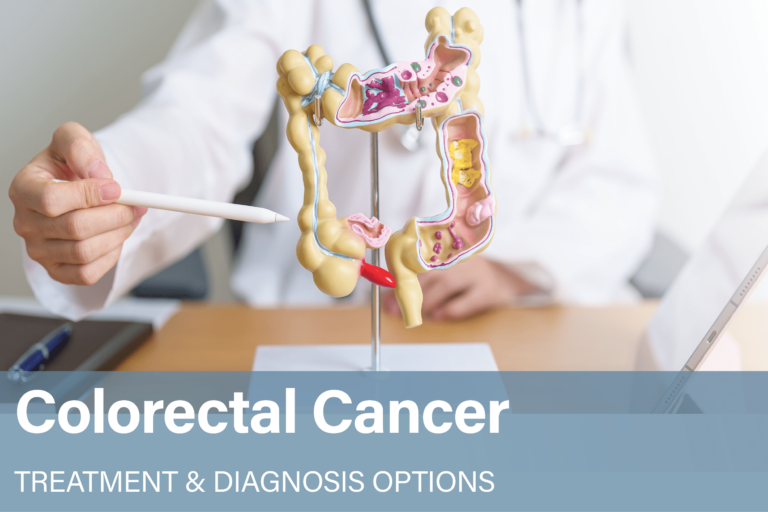
Colorectal Cancer: Treatment & Diagnosis Options

Colorectal Cancer Treatment Diagnosis Options

Colorectal cancer remains a global health concern, but progress in early detection and treatment offers hope.  

Diagnosis: 

  • Screening Tests: Key for early detection, including colonoscopies, FOBT, FIT, and stool DNA tests. 
  • Diagnostic Procedures: If abnormalities are detected, further tests like sigmoidoscopies, CT scans, MRI scans, or biopsies may be necessary. 

Treatment Options:  

Surgery: Surgery is often the primary treatment for colorectal cancer. The goal of surgery is to remove the cancerous tumor and any surrounding affected tissue. Depending on the stage and location of the cancer, surgical options may include polypectomy, local excision, colectomy, or ostomy procedures.  

Chemotherapy: Chemotherapy may be used before or after surgery to shrink tumors, kill cancer cells, or prevent the spread of cancer to other parts of the body. Chemotherapy drugs may be administered orally, intravenously, or directly into the abdominal cavity, depending on the specific treatment plan.  

Radiation Therapy: Radiation therapy uses high-energy beams to target and destroy cancer cells. It may be used alone or in combination with surgery and chemotherapy to treat colorectal cancer, particularly in cases where the cancer has spread to nearby tissues or lymph nodes.  

Targeted Therapy: Targeted therapy drugs are designed to specifically target cancer cells while minimizing damage to healthy cells. These drugs may be used in combination with chemotherapy or as standalone treatments for advanced colorectal cancer that has not responded to other therapies.  

Immunotherapy: Immunotherapy works by stimulating the body’s immune system to recognize and attack cancer cells. While not yet a standard treatment for colorectal cancer, ongoing research is exploring the potential of immunotherapy drugs in treating advanced or recurrent colorectal cancer.   

By understanding the diagnostic procedures and treatment options available, patients and their caregivers can make informed decisions about their care and work towards the best possible outcomes. Regular screening, early detection, and timely intervention remain the cornerstones of successful colorectal cancer management. 

Contact Us

Latest Articles

Why Follow-Up Matters

Follow-up appointments are an important part of staying healthy. Whether you’re managing a condition, monitoring progress, or simply keeping up

Read More »

Like What You See? Share With A Friend!

EXPERT CARE

Our caring team of experts are here to provide you with a custom-tailored treatment plan that is unique to your diagnosis, tumor size, location and involvement. Click on the button below to learn more.