Holiday Hours:

Monday, January 19, 2026 – Closed
In observance of Martin Luther King Jr. Day.

As of the afternoon of January 23, 2025, our phones are operational. Thank you for your patience as our phone provider experienced a national outage that impacted our phone services on the afternoon of January 22 and the morning of January 23.

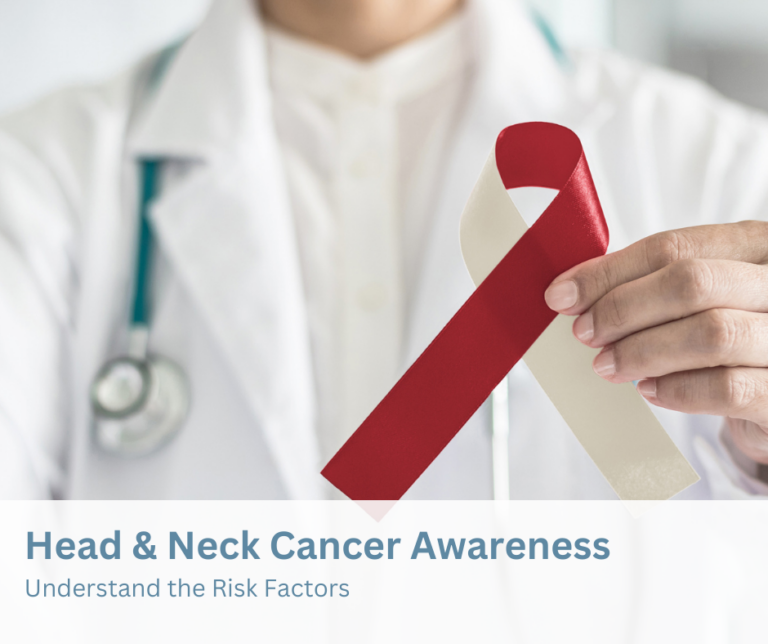
Head and Neck Cancer Awareness

head neck awareness

Head and neck cancers are a group of malignancies that affect various structures in the head and neck region, including the mouth, throat, larynx, and sinuses. Head and neck cancers account for about 4 percent of cancer cases in the United States. It is estimated that nearly 67,000 people in the United States will be diagnosed with head and neck cancers in 2023. Men are twice as likely to be diagnosed with head and neck cancer compared to women.

Head and neck cancers encompass a diverse range of malignancies, each with its own unique characteristics and challenges. These cancers can arise from the mucosal surfaces lining the oral cavity, pharynx, and larynx, as well as from the salivary glands, sinuses, and nasal cavity. While some head and neck cancers are relatively rare, others, such as squamous cell carcinoma, are more common.

Risk Factors: Several factors increase the risk of developing head and neck cancer, including:

  1. Tobacco use: Smoking cigarettes, cigars, or pipes, as well as using smokeless tobacco products, significantly increases the risk of head and neck cancer.
  2. Alcohol consumption: Heavy and prolonged alcohol consumption is another major risk factor for head and neck cancer, particularly when combined with tobacco use.
  3. Human papillomavirus (HPV) infection: Certain strains of HPV, particularly HPV-16, have been linked to an increased risk of oropharyngeal cancers.
  4. Sun exposure: Prolonged exposure to ultraviolet (UV) radiation from the sun or other sources increases the risk of lip cancer.
  5. Poor oral hygiene: Neglecting oral hygiene practices can contribute to the development of oral cavity cancers.


By understanding the basics of head and neck cancer and the risk factors associated with it, individuals can take proactive steps to reduce their risk and prioritize their health.

Contact Us

Latest Articles

Why Follow-Up Matters

Follow-up appointments are an important part of staying healthy. Whether you’re managing a condition, monitoring progress, or simply keeping up

Read More »

Like What You See? Share With A Friend!

EXPERT CARE

Our caring team of experts are here to provide you with a custom-tailored treatment plan that is unique to your diagnosis, tumor size, location and involvement. Click on the button below to learn more.