Honoring Caregivers: The Strength Behind Every Cancer Journey
February is a time to recognize the caregivers who stand beside patients through every stage of cancer care. From diagnosis
Monday, January 19, 2026 – Closed
In observance of Martin Luther King Jr. Day.
As of the afternoon of January 23, 2025, our phones are operational. Thank you for your patience as our phone provider experienced a national outage that impacted our phone services on the afternoon of January 22 and the morning of January 23.
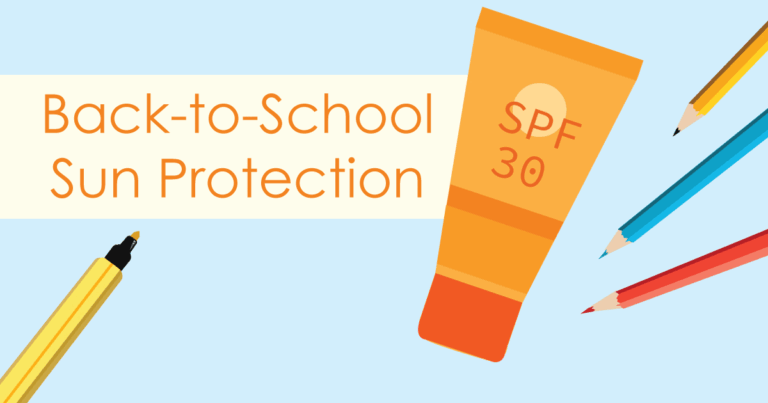
As you prepare to send your kids back to school, the to-do lists and back-to-school shopping start to pile up. It’s no surprise sun protection slips down the list of priorities as you move away from outdoor activities and focus on classroom needs.
But don’t put the sunscreen away just yet. Studies show that children sustain significant amounts of sun exposure while at school. About 23 percent of lifetime UV exposure occurs before the age of 18. This exposure can have far-reaching effects. Because sun damage is cumulative, too much sun exposure during childhood can contribute to a higher risk of skin cancer later in life.
Consider the following tips from the Skin Cancer Foundation before your kids return to school.
Ask the school administration, teacher, or coaches about the planned breaks while the class is outside. UV rays are most intense from 10 a.m. to 4 p.m. Typically, students have outdoor recess or after-school sports between these peak sun hours. Ask if there are accommodations for shaded break areas. Covered areas like gazebos, roof structures, awnings, shade sails, and natural shade, such as thickly leaved trees, are some examples of shaded rest areas.
Clothing choice is a basic form of sun protection. Dressing in densely woven and bright-colored clothes is the single most effective form of sun protection for the body. Send your children to school in densely woven and bright- or dark-colored fabrics. The more skin you cover, the better, so choose long sleeves shirts and pants whenever possible.
Send children to school with a wide-brimmed hat or baseball cap and UV-blocking sunglasses to protect their face, neck, and eyes.
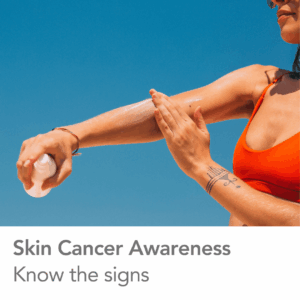
Sunscreen: Make sunscreen part of the morning routine. At least 30 minutes before children go outside, parents should apply a broad spectrum (UVA/UVB) sunscreen with an SPF 30 or higher to their skin. Older children should learn to apply sunscreen themselves and make it a routine habit. To remain effective, sunscreen should be reapplied every two hours or immediately after swimming or sweating. At a minimum, remind children to reapply sunscreen before after-school sports and outdoor activities. One ounce of sunscreen (about the size of a golf ball) should be applied to the entire body. Remind children to cover those easy-to-miss spots, such as the back of the ears and neck, as well as the tops of the feet and hands.

February is a time to recognize the caregivers who stand beside patients through every stage of cancer care. From diagnosis
February is Heart Health Month, and protecting cardiovascular health is an important part of cancer care. Modern oncology focuses not

Prevention Starts with Everyday Choices National Cancer Prevention Month is a reminder that many cancers are influenced by daily habits.

Follow-up appointments are an important part of staying healthy. Whether you’re managing a condition, monitoring progress, or simply keeping up

February is a time to recognize the caregivers who stand beside patients through every stage of cancer care. From diagnosis
February is Heart Health Month, and protecting cardiovascular health is an important part of cancer care. Modern oncology focuses not

Prevention Starts with Everyday Choices National Cancer Prevention Month is a reminder that many cancers are influenced by daily habits.
Our caring team of experts are here to provide you with a custom-tailored treatment plan that is unique to your diagnosis, tumor size, location and involvement. Click on the button below to learn more.