Holiday Hours:

Monday, January 19, 2026 – Closed
In observance of Martin Luther King Jr. Day.

As of the afternoon of January 23, 2025, our phones are operational. Thank you for your patience as our phone provider experienced a national outage that impacted our phone services on the afternoon of January 22 and the morning of January 23.

Lung Cancer Risk Factors and Prevention

Lung Cancer Risk Factors and Prevention

Lung Cancer Risk Factors and Prevention

Preventing lung cancer is possible with lifestyle adjustments, risk awareness, and screenings. Here’s what you need to know about the factors that increase lung cancer risk and how to reduce them.

Risk Factors for Lung Cancer

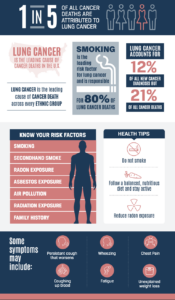
  • Smoking: Smoking is the leading cause of lung cancer, accounting for about 80-90% of cases. Tobacco contains carcinogens that damage lung cells, leading to cancerous mutations.
  • Secondhand Smoke: Even if you don’t smoke, exposure to secondhand smoke significantly raises lung cancer risk.
  • Radon Exposure: Radon, a radioactive gas found in soil, can seep into homes, especially in poorly ventilated spaces. High radon levels increase lung cancer risk.
  • Exposure to Carcinogens: Prolonged exposure to certain chemicals and toxins, like asbestos, arsenic, or diesel exhaust, can increase lung cancer risk.
  • Genetics and Family History: Those with a family history of lung cancer may be genetically predisposed.

Lung Cancer Prevention Tips

  • Quit Smoking: Quitting smoking is the most impactful step. Seek support from a healthcare provider or join smoking cessation programs.
  • Avoid Secondhand Smoke: Encourage a smoke-free home environment and avoid places where you’re likely to inhale smoke.
  • Test for Radon: Radon test kits are available to check your home’s radon levels. If levels are high, remediation can help reduce your risk.
  • Wear Protective Gear: If you work with harmful chemicals, always use protective equipment and follow workplace safety guidelines.

Lifestyle Choices that Support Lung Health

Eating a diet rich in fruits and vegetables, exercising regularly, and maintaining a healthy weight can help bolster your body’s defense against cancer.

Early Screening for Lung Cancer

Early screening is available, especially for those over 50 with a history of smoking. Low-dose CT scans can detect lung cancer in its early stages, when treatment is more effective.

Contact Us

Latest Articles

Why Follow-Up Matters

Follow-up appointments are an important part of staying healthy. Whether you’re managing a condition, monitoring progress, or simply keeping up

Read More »

Like What You See? Share With A Friend!

EXPERT CARE

Our caring team of experts are here to provide you with a custom-tailored treatment plan that is unique to your diagnosis, tumor size, location and involvement. Click on the button below to learn more.